Cardio and Dementia: Can Cardiovascular Fitness Help Protect Your Brain?
For years, we’ve sold cardio to people for all the wrong reasons.
Burn calories. Lose weight. Get fitter. Work off what you ate on the weekend.
And while there’s nothing wrong with those things, they completely undersell what cardiovascular exercise can actually do for your health.
Because one of the most important reasons to improve your cardiovascular fitness might have absolutely nothing to do with the scales.
It might be your brain.
As an Exercise Physiologist, I think this is a conversation we need to be having more often — particularly as we get older.
Dementia is now Australia’s leading cause of death
According to the latest Australian Bureau of Statistics data, dementia, including Alzheimer’s disease, is now the leading cause of death in Australia, accounting for 9.4% of all deaths in 2024.
There is no guaranteed way to prevent dementia. Age, genetics and many other factors play a role.
But there are also risk factors we can influence.
The World Health Organization identifies physical inactivity, high blood pressure, diabetes and high cholesterol among the potentially modifiable factors associated with dementia risk.
And that’s where exercise becomes particularly interesting.
Cardiovascular fitness and dementia risk
A major 2026 systematic review and meta-analysis published in Nature Mental Health examined 27 studies involving more than four million people.
It found that people with high cardiorespiratory fitness had a 39% lower risk of all-cause dementia compared with those with low fitness.
That’s significant.
It doesn’t mean getting fit guarantees you won’t develop dementia, nor does it prove exercise alone caused that reduction.
But it demonstrates a pretty compelling relationship between cardiorespiratory fitness and brain health.
So why might that relationship exist?
How can cardio help protect your brain?
Your brain is incredibly dependent on your cardiovascular system.
It needs a constant supply of oxygen and nutrients, delivered through an enormous network of blood vessels.
Over time, things such as high blood pressure, high cholesterol, poor blood sugar control and damage to blood vessels can affect the health of that network and are also associated with an increased risk of dementia.
Regular cardiovascular exercise can help improve many of these risk factors.
So when you train your cardiovascular system, you’re not just training your heart.
You’re also helping look after the system that keeps your brain healthy.
Where does HIIT come into it?
This is one of the reasons we include cardiovascular fitness training at Body MBrace.
HIIT involves periods where you’re working hard enough to challenge your cardiovascular system, followed by periods of recovery.
Your heart rate increases. You breathe harder. Your cardiovascular system has to work harder to deliver oxygen around your body.
Over time, your body adapts and your cardiorespiratory fitness improves.
And importantly, HIIT doesn’t mean absolutely destroying yourself.
“High intensity” is relative to the individual. For one person that might mean running. For someone else, it might mean working harder on a bike, rower or even walking uphill.
The goal is simply to challenge your cardiovascular system enough that it has a reason to adapt.
You don’t need hours of cardio
This is perhaps the best part.
One randomised controlled trial had participants complete just 30 minutes of aerobic exercise twice per week for four months.
Their cardiorespiratory fitness improved by around 9%, demonstrating that relatively small amounts of structured aerobic exercise can make a meaningful difference to fitness.
That doesn’t mean two 30-minute sessions is the perfect prescription for everybody, and Australian physical activity guidelines recommend higher overall weekly activity levels.
But it does demonstrate something important:
You don’t need to live on a treadmill to improve your cardiovascular fitness.
Consistency matters.
Don’t choose between strength and cardio
Strength training is incredibly important, particularly as we age.
We need muscle. We need strong bones. We need strength to maintain our independence and continue doing the things we enjoy.
But it shouldn’t be strength OR cardio.
Your muscles need resistance.
Your cardiovascular system needs cardiovascular exercise.
We need both.
Cardio is about much more than calories
If the only reason you’ve ever done cardio is to burn calories, you’ve been sold a very small part of a much bigger story.
Cardiovascular exercise trains your heart, lungs and blood vessels. It improves your cardiorespiratory fitness and can positively influence many of the risk factors that become increasingly important as you age.
And according to a growing body of research, your brain may benefit too.
That doesn’t mean exercise can guarantee you’ll never develop dementia.
But our physical activity and cardiovascular fitness are things we can influence.
And that makes them worth training.
So next time you’re halfway through a HIIT session, your heart is pounding and you’re wondering why on earth we’re making you do this…
Remember:
You’re not just burning calories.
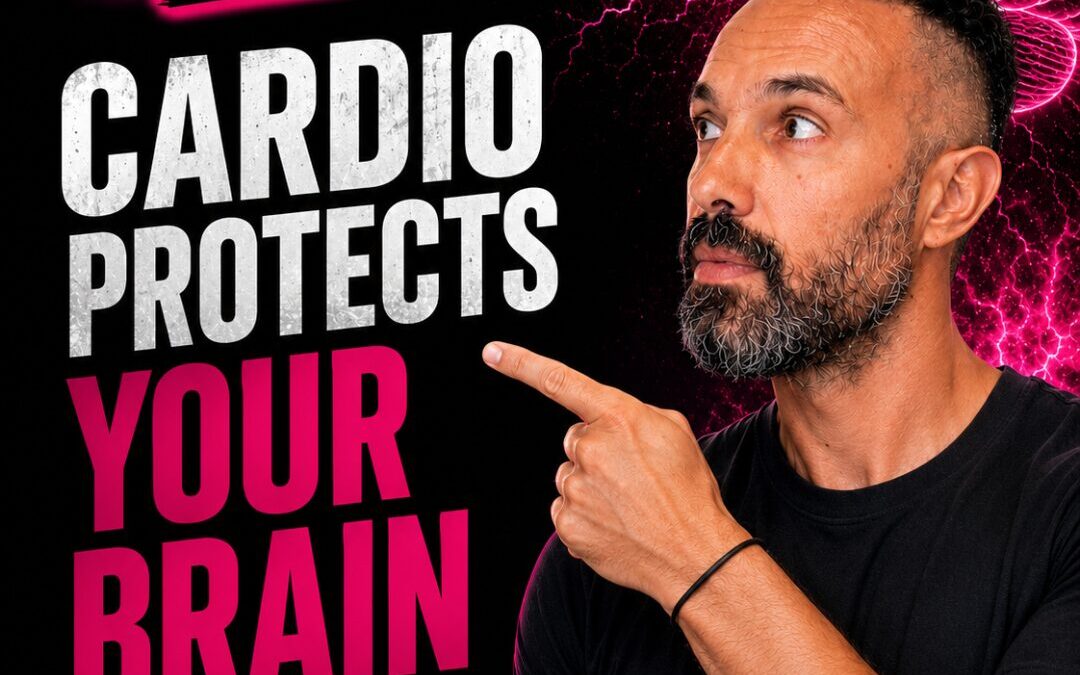
Train your heart. Protect your brain.