
There’s a lot of noise in the health and fitness space.
Complicated programs, extreme challenges, detoxes, “quick fixes”, and constant new rules about what you should and shouldn’t be doing. It’s easy to see why so many people feel overwhelmed before they’ve even started.
But when you strip it all back, getting healthier really isn’t that complicated.
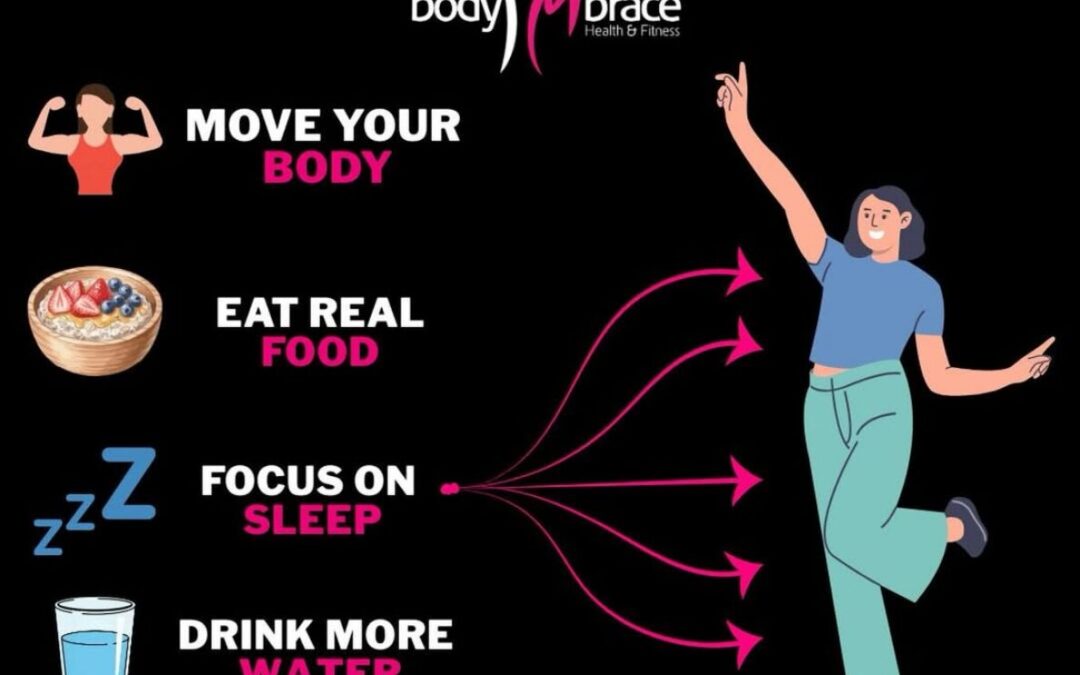
Move your body regularly. Eat mostly real food. Sleep properly. Drink enough water. Then repeat it often enough that it actually becomes part of your life.
That’s the part most people miss.
Not because they don’t know what to do, but because they keep getting pulled away from the basics by something that promises faster or easier results.
The problem with overcomplicating health
Most people don’t fail because they lack motivation or discipline. They struggle because the approach they’re following is too hard to maintain.
It starts with good intentions. A strict plan, a new challenge, a big reset. For a few weeks things feel structured and “on track”. But life inevitably gets busy, and when the plan doesn’t fit real life, it slowly falls apart.
Then comes the frustration. The sense of starting again. The feeling that maybe they just need something different.
In reality, they usually just need something simpler.
Health isn’t built through perfect weeks. It’s built through something you can keep doing when life isn’t perfect.
What exercise actually does for you
Exercise often gets reduced to weight loss or changing how you look, but its impact goes far deeper than that.
When you train consistently, your energy levels start to lift throughout the day. Your mood becomes more stable. Your mind feels clearer. Your body feels stronger and more capable, not just in the gym but in everyday life.
Over time, things that used to feel effortful start to feel normal. You carry yourself differently. You handle stress better. You trust your body more.
That’s the real value of movement. It’s not punishment, and it’s not something you “earn” through suffering. It’s something that supports how you live.
Food is fuel, not something to fear
Eating well is often made far more complicated than it needs to be.
Somewhere along the way, food became something to control, restrict or battle with. But in reality, it’s just fuel for your body.
When most of what you eat is real, minimally processed food, your body responds in a predictable way. Energy improves. Recovery improves. Focus sharpens. Cravings become easier to manage.
This doesn’t mean you need to be perfect. It doesn’t mean you can’t enjoy the foods you love. It just means that most of the time, you’re giving your body what it actually needs to function well.
Consistency matters far more than perfection ever will.
The underestimated foundations: sleep and water
If there are two areas people consistently overlook, it’s sleep and hydration.
Poor sleep affects everything. Your energy, your mood, your appetite, your motivation, even your ability to make good decisions. When sleep is off, everything feels harder than it should.
Hydration is similar. When you’re not drinking enough water, even basic tasks can feel more draining than they need to be. Energy drops, performance suffers, and recovery slows down.
These aren’t advanced strategies. They are basic human needs, and when they’re dialled in, everything else tends to work better.
Why consistency beats intensity
One of the biggest misconceptions in health is that you need to do more to get better results.
More intensity, more effort, more sessions, more structure.
But in reality, it’s rarely the most extreme approach that wins. It’s the one that can be maintained over time.
Small actions, repeated often enough, are what actually create change.
A workout you can repeat every week.
A few simple meals you rely on most days.
A daily walk.
A better night’s sleep most nights.
Drinking more water without thinking about it.
On their own, none of these feel like much. But over weeks and months, they add up in a way that completely changes how you feel and function.
Why people don’t see results
Most people actually do the “right” things at some point. They start training. They clean up their diet. They try to be more consistent.
The issue is usually not the plan itself, but how long they stick with it before changing direction.
When results aren’t immediate, it’s easy to assume something isn’t working. So the plan gets swapped out, or restarted, or replaced with something new.
But most approaches work if they’re given enough time. The missing piece is usually consistency, not complexity.
Keep it simple enough to stick to
The goal is not to find the perfect plan. It’s to find something that fits into your actual life.
Something that doesn’t rely on motivation being high every day.
Something that doesn’t fall apart the moment life gets busy.
Something that feels doable even on average weeks.
Because the best plan is rarely the most impressive one on paper. It’s the one you can actually sustain long enough for it to matter.
Final thought
Health doesn’t need to be complicated.
It doesn’t require extremes, perfection, or constant reinvention.
Move your body.
Eat mostly real food.
Sleep properly.
Drink more water.
Do it consistently, long enough for it to work.
That’s where real change happens.